


Did you know the global digital payments market is projected to process over $36 trillion in transaction value by 2029? (Source: Statista)
If you’re choosing a payment solution for your business, you’ve likely come across the terms payment processor and payment facilitator (PayFac). Although they both help businesses accept digital payments, they perform different roles in the payment ecosystem. Understanding those differences can help you choose the right payment infrastructure for your business.
In this guide, we’ll explain how each model works, compare their key differences, and help you decide which option best fits your needs.
How a Payment Transaction Works
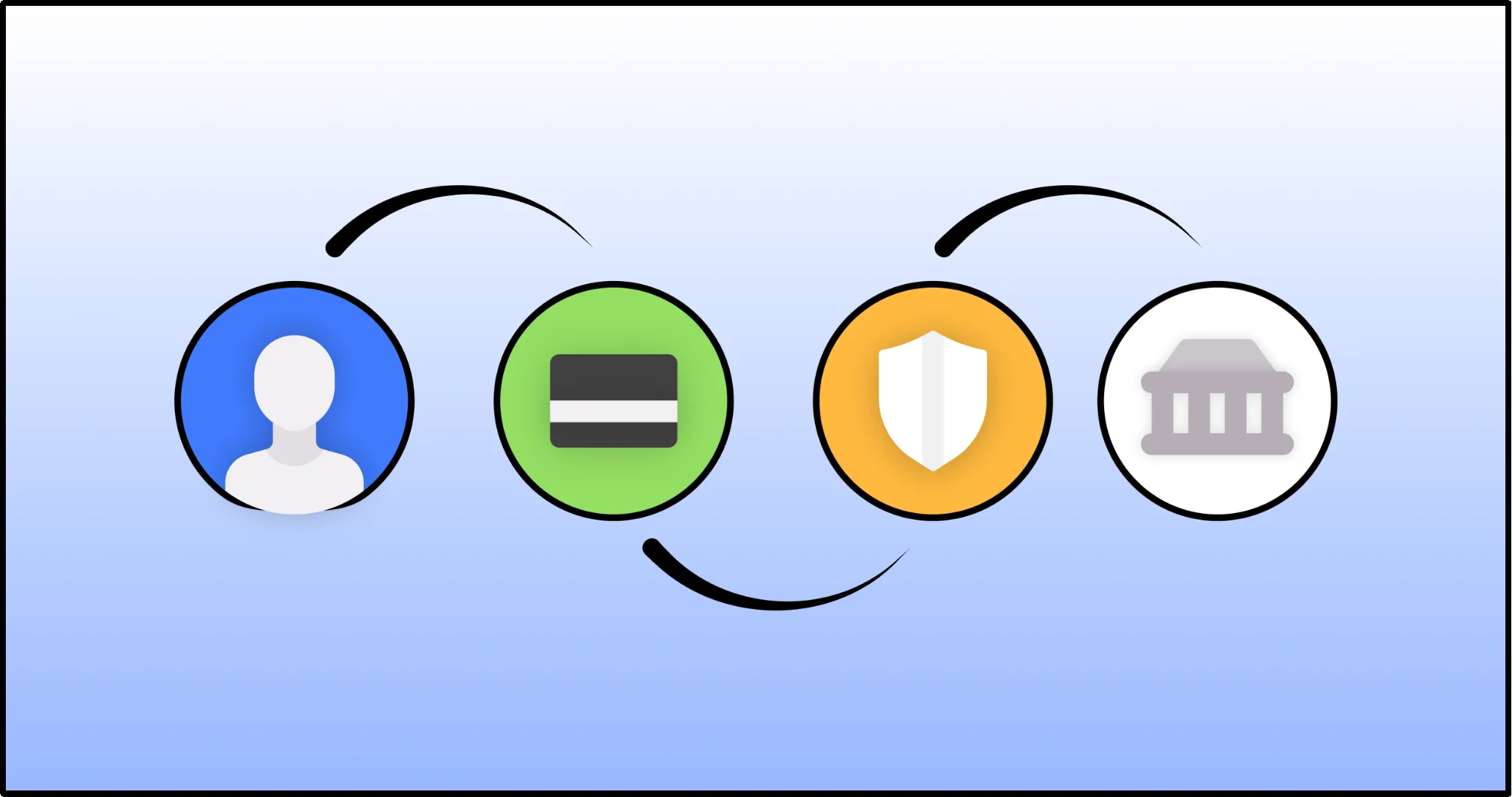
A typical card transaction moves through several parties in seconds:
Customer → Payment Gateway → Payment Processor → Card Network → Issuing Bank → Acquiring Bank → Merchant
In a PayFac model, the payment facilitator sits between the merchant and the processor by managing merchant onboarding, compliance, and settlement while relying on the processor to route transactions.
The gateway captures the transaction data. The processor routes it to the card network (Visa, Mastercard, etc.), which checks with the customer’s issuing bank for authorization. Once approved, funds move from the issuing bank through the acquiring bank and eventually settle into the merchant’s account.
Where Payment Processors Fit
A payment processor handles the technical routing and authorization of a transaction. It’s the engine that communicates with card networks and banks on the merchant’s behalf, but it typically doesn’t own the merchant relationship; that sits with an acquiring bank or merchant account provider.
Where Payment Facilitators Fit
A payment facilitator sits atop the same infrastructure but restructures the merchant relationship. Instead of every business getting its own merchant account, the PayFac holds a single master merchant account and onboards individual businesses as sub-merchants.
What is a Payment Processor?
A payment processor is a financial technology company that securely authorizes, routes, and settles electronic payment transactions between merchants, banks, and card networks. It forms the core infrastructure that enables businesses to accept digital payments.
Here’s how a payment processor moves a transaction through the system:
- Authenticates the customer’s card or payment method details.
- Encrypts and securely transmits the transaction data.
- Routes the transaction to the appropriate card network (such as Visa or Mastercard).
- Requests authorization from the customer’s issuing bank.
- Returns the approval or decline response to the business.
- Routes approved transactions for settlement through the acquiring bank to the merchant’s account.
- Supports fraud detection, transaction monitoring, and risk management throughout the payment process.
- Helps manage post-transaction activities such as chargebacks, refunds, and card-not-present (CNP) fraud.
- Often provides additional payment tools, such as POS terminals, card readers, recurring billing, reporting dashboards, and payment APIs.
Beyond the core transaction flow, many payment processors also offer additional services such as reporting dashboards, payment APIs, recurring billing, POS solutions, and card readers. Some providers also bundle inventory management and other business tools, making them more than just payment processing providers.
Advantages
- Lower fees for high-volume businesses
- More control
- Direct merchant account
- Better customization
Limitations
- Longer approval process
- Higher compliance responsibility
- More setup
Also Read: Payment Processing Explained: What It Is and How It Works
What Is a Payment Facilitator (PayFac)?
A payment facilitator (PayFac) simplifies merchant onboarding by allowing businesses to accept payments under its master merchant account instead of opening individual merchant accounts.
This matters most for newer or smaller businesses. Applying for an individual merchant account usually comprises underwriting delays, minimum volume requirements, and thresholds that only established businesses can easily meet. Thanks to PayFac, a business can be onboarded and accepting payments in a fraction of the time.
Here’s how a payment facilitator typically operates:
- Onboards businesses as sub-merchants under its own master merchant account
- Runs streamlined KYC (Know Your Customer) and KYB (Know Your Business) checks instead of full individual underwriting
- Activates payment acceptance in minutes or hours rather than days or weeks
- Aggregates transactions across all sub-merchants before disbursing funds
- Takes on the bulk of compliance, fraud monitoring, and risk management
- Often provides the underlying software or APIs a platform needs to embed payments
Platforms like Stripe, Square, and Shopify Payments operate primarily as payment facilitators, which is why a new business can sign up and start accepting payments almost immediately, rather than waiting on a traditional bank’s underwriting process.
Advantages
- Fast onboarding
- Simple pricing
- Minimal paperwork
- Easy scaling
Limitations
- Less customization
- Higher transaction fees
- Limited control over underwriting
Payment Processor vs. Payment Facilitator: Key Differences
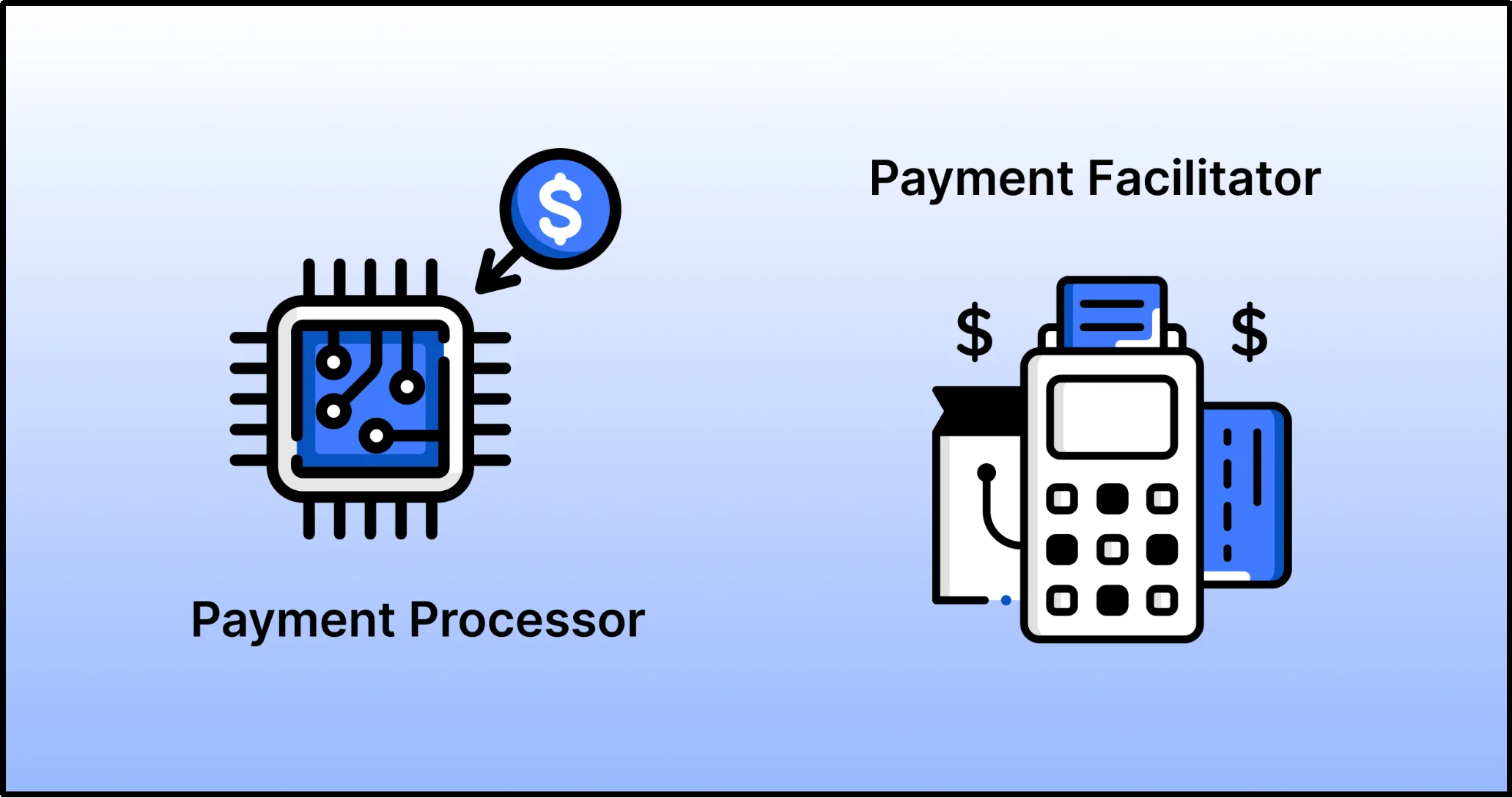
While both payment processors and payment facilitators enable businesses to accept electronic payments, they serve different roles within the payment ecosystem. The table below highlights their key differences, followed by examples of how leading payment providers fit into these models.
| Key Difference | Payment Processor | Payment Facilitator (PayFac) |
| Primary Role | Processes and authorizes payment transactions | Onboards merchants and enables payment acceptance |
| Merchant Account | Requires a dedicated merchant account | Uses a master merchant account for sub-merchants |
| Onboarding Time | Days to weeks | Minutes to hours |
| Compliance | Merchant manages most compliance requirements | PayFac handles much of the compliance and risk management |
| Pricing | Typically negotiated or interchange-plus | Usually flat-rate or tiered pricing |
| Best For | Established businesses with high transaction volumes | Startups, small businesses, SaaS platforms, and marketplaces |
Common Examples:
- Stripe → Primarily operates as a payment facilitator (PayFac) while also providing payment processing, payment gateway, and developer APIs.
- Square → A well-known payment facilitator that helps small businesses accept in-person and online payments with fast merchant onboarding.
- Shopify Payments → A payment facilitator built specifically for Shopify merchants, powered by Stripe’s payment infrastructure in many regions.
- Worldpay → A traditional payment processor and merchant acquirer serving businesses of all sizes.
- Adyen → A global payment platform that combines payment processing, acquiring, and gateway services for enterprise businesses.
- PayPal → A digital payments platform that acts as a payment facilitator for many merchants while also offering payment processing and checkout solutions.
- Fiserv → A leading payment processor and merchant services provider offering payment processing, acquiring, and POS solutions.
It’s worth noting that many providers don’t fit neatly into one box. A single company can act as a gateway, a processor, and a PayFac depending on the product line, which is why reading the fine print of any provider’s merchant agreement matters more than the marketing label.
Payment Processor vs Payment Facilitator: Factors to Consider
Choosing between a payment processor and a payment facilitator isn’t only about transaction fees. You should also consider onboarding speed, compliance responsibilities, scalability, pricing, and the level of control you need over your payment infrastructure.
- Merchant Accounts: The core distinction is that a processor connects to a merchant account you own, whereas a PayFac gives you access to payment acceptance under an account it owns.
- Onboarding: Processor onboarding involves individual underwriting by a bank, which takes time. PayFac onboarding is designed for speed, using automated risk checks to activate merchants quickly.
- Compliance: With a processor, the merchant carries more direct compliance responsibility, including PCI DSS obligations. With a PayFac, much of this — including KYC and KYB checks – is handled by the facilitator on behalf of its sub-merchants.
- Risk Management: Processors distribute risk across individual merchant relationships. PayFacs concentrate risk at the platform level, which is why they typically invest heavily in fraud detection and underwriting technology.
- Fraud Prevention: Both models rely on tokenization, transaction monitoring, and authorization checks, but PayFacs often build more automated, real-time fraud-detection tooling since they manage risk across thousands of sub-merchants at once.
- Settlement Process: Processor settlements flow directly to the merchant’s own account. PayFac settlements are aggregated under the master account, then split and disbursed to each sub-merchant.
- Revenue Model: Processors often charge interchange-plus or negotiated volume-based pricing. PayFacs commonly use flat-rate or tiered pricing that bundles in the underwriting and risk management they provide.
- Pricing Structure: Processor pricing tends to favor high-volume, negotiated deals. PayFac pricing favors simplicity and predictability, which appeals to smaller or newer merchants.
- Scalability: A processor scales well for one large business. A PayFac model scales well for a platform trying to onboard many smaller merchants under one roof.
- Integration Complexity: Traditional processors usually require more setup and configuration. Payment facilitators simplify integration by combining onboarding, payments, and merchant management into a single platform.
💡 Expert Tip: If your business processes a high volume of transactions each month, a traditional payment processor with interchange-plus pricing may help reduce processing costs over time. If you’re a startup, small business, SaaS platform, or marketplace, a payment facilitator can help you start accepting payments much faster by eliminating the need for a separate merchant account and streamlining merchant onboarding.
Which Businesses Benefit Most from Each Model?
The right payment solution depends on your business model, transaction volume, growth plans, and compliance requirements. While both payment processors and payment facilitators help businesses accept online payments, each option serves different business needs.
A payment processor is often the better choice for:
- Established businesses with high monthly transaction volumes
- Enterprise companies that want a dedicated merchant account
- Businesses that need custom payment integrations and pricing
- Merchants with the resources to manage PCI DSS compliance and payment infrastructure
- Companies that want greater control over payment processing and settlement
A payment facilitator (PayFac) is often the better choice for:
- Startups and small businesses that need fast merchant onboarding
- SaaS platforms offering embedded payment solutions
- Online marketplaces managing multiple sellers
- Subscription businesses that want a simple payment setup
- Businesses that prefer flat-rate pricing and fewer compliance responsibilities
Understanding which model aligns with your business goals can help you reduce costs, simplify payment management, and create a better payment experience for your customers.
Payment Processor vs. Payment Facilitator: Which is the Best For Your Business?

Choosing between a payment processor and a payment facilitator depends on your business model, size, and specific payment needs. Each option has unique advantages, making it better suited for certain types of businesses.
When Should You Choose a Payment Processor?
- Enterprise merchants with high, predictable transaction volume
- Businesses that want a direct relationship with an acquiring bank
- Companies building a highly customized payment stack
- Merchants with the internal resources to manage compliance directly
When Should You Choose a Payment Facilitator?
- SaaS platforms that want to offer embedded payments to their users
- Marketplaces onboarding many independent sellers
- Vertical software companies serving a specific industry
- Franchise systems needing consistent, centralized payment management
- Creator platforms and gig-economy apps paying out many individuals
- Subscription businesses needing fast merchant activation
Emerging Trends in Payment Infrastructure
The payments industry is evolving quickly to deliver faster, more secure, and scalable payment experiences. Here are some of the key trends shaping modern payment infrastructure:
- Embedded Payments: Integrating payment capabilities directly into software platforms so users can pay without leaving the application.
- Embedded Finance: Expanding financial services within non-financial platforms by offering payments, lending, banking, and insurance through a unified user experience.
- PayFac-as-a-Service (PFaaS): Allowing businesses to become payment facilitators without building and maintaining their own payment infrastructure.
- Payment Orchestration: Connecting multiple payment providers through a single platform to improve payment routing, increase authorization rates, and enhance payment reliability.
- Open Banking Payments: Enabling secure bank-to-bank payments through open banking APIs, reducing reliance on card networks and lowering transaction costs.
- Account-to-Account (A2A) Payments: Allowing customers to transfer funds directly between bank accounts without using credit or debit cards.
- Real-Time Payments (RTP): Processing and settling transactions almost instantly, giving businesses and customers faster access to funds.
- AI Fraud Detection: Using machine learning to identify suspicious transactions and prevent payment fraud in real time.
- Network Tokenization: Replacing sensitive card information with secure payment tokens to improve security and reduce the scope of PCI DSS compliance.
- Instant Merchant Onboarding: Automating identity verification and underwriting so businesses can start accepting payments within minutes.
- Global Payment Expansion: Supporting multi-currency payments, local payment methods, and cross-border transactions to help businesses grow internationally.
Making the Right Choice Between Two
The difference between a payment processor and a payment facilitator comes down to one core question: who owns the merchant relationship, and who carries the risk that comes with it?
A payment processor gives a business direct ownership of its own merchant account, more customization, and often better economics at high volume. A payment facilitator trades some of that control for speed, simplicity, and a much faster path to accepting payments.
The right choice depends on your business type, technical resources, compliance appetite, and growth plans. Platforms that onboard many smaller merchants generally lean toward a PayFac model, while single large merchants often do better working directly with a processor and an acquiring bank.
If you want to accept Square payments on your WordPress website without WooCommerce, WP EasyPay makes it easy to connect to Square, securely accept online payments, and offer a smooth checkout experience.
Frequently Asked Questions
Are Stripe and Square payment facilitators?
Yes, both operate primarily as payment facilitators, onboarding businesses as sub-merchants under their master accounts.
Does a payment facilitator use a payment processor?
Yes. PayFacs still rely on underlying processing infrastructure to route and authorize transactions; they add a merchant-onboarding and risk layer on top.
Is a payment processor the same as a payment gateway?
No. A gateway captures and encrypts transaction data at checkout; a processor routes that data for authorization and settlement. They’re often bundled but serve different functions.
Who owns the merchant account?
With a processor, the merchant owns its own account. With a PayFac, the facilitator owns the master account, and the merchant operates as a sub-merchant.
Do payment facilitators handle compliance?
Largely, yes. PayFacs manage KYC, KYB, and much of the ongoing compliance monitoring for their sub-merchants, though sub-merchants still have some responsibilities.
Is Stripe a payment processor or a payment facilitator?
Although Stripe provides payment processing infrastructure, it primarily operates as a payment facilitator by onboarding businesses as sub-merchants under its master merchant accounts.
Can a payment facilitator replace a payment processor?
No. A payment facilitator still relies on an underlying payment processor to authorize, route, and settle transactions.
Which option is better for small businesses?
Most small businesses benefit from a payment facilitator because it offers faster onboarding, simplified compliance, and predictable pricing. Larger businesses with higher transaction volumes may prefer a traditional payment processor for greater flexibility and lower negotiated fees.